How to Find Underserved Customer Groups in a Busy Market
In nearly every industry, competition for the same customers is fierce. Businesses chase the same demographics, run similar campaigns, and fight over the same keywords. Yet beneath the surface, groups of potential buyers remain overlooked. These underserved segments often have distinct needs that established competitors ignore or serve poorly. Identifying them can unlock growth without the cost of head-to-head battles.
The challenge is knowing where to look and what signals matter. A market intelligence engine helps here by pulling together data that reveals patterns no single source can show. With the right approach, you can spot gaps before competitors do and build offers that speak directly to people who feel ignored.
Step 1: Map the Market as It Actually Exists
Start with a broad view. List every customer segment you know of, but also consider groups that are not obvious. For example, a local service might have different buyers based on property type, income level, or urgency of need. A product sold to small businesses might also appeal to freelancers, nonprofits, or remote teams in other regions.
Use competitor activity to check your map. Look at who your rivals target in their ads, landing pages, and content. If they all write for the same persona, that persona is well served. The gaps appear where competitors rarely show up. Pay attention to search queries that get few results or thin content. Those queries often signal unmet demand.
What to watch for
Notice where competitors repeat the same message. If every brand in your space talks about speed, for instance, the segment that cares more about customization may be underserved. Also look at customer reviews of competitors. Complaints about missing features, poor support, or confusing processes point to needs that are not being met.
Step 2: Analyze Search Intent Beyond Primary Keywords
Standard keyword research focuses on volume. But volume can mislead. A high-volume term like "best accounting software" is crowded and vague. The real opportunity lies in long-tail queries that reveal specific intent. Phrases like "accounting for landscaping businesses" or "nonprofit bookkeeping tools" indicate a narrow audience that may have few good options.
Market demand shows up in the questions people ask. Forums, social media groups, and Q&A sites are rich sources. People describe their frustrations and wish lists openly. When you see the same question asked repeatedly with no satisfying answer, you have found an edge.
Customer intent is more than a keyword. It is the problem someone is trying to solve at that moment. Someone searching "how to invoice clients in multiple currencies" has a concrete need. If existing solutions are complex or expensive, a simpler option could win that segment.
Step 3: Look for Demographic and Geographic Overlaps
Some underserved segments are defined by where they live or who they are. A product that works well in urban areas might fail for rural customers who lack fast internet. A service priced for large enterprises may exclude solo practitioners who could benefit from a lighter version.
Local search data can reveal clusters of demand. If you see high search volume for a type of service in a specific city but few local providers, that is a gap. Similarly, demographic overlaps like age, income bracket, or industry can create segments that are too small for big competitors but sizable enough for a focused business.
What to watch for
Check whether competitors adapt their offers for different locations or audiences. Many do not. If a competitor treats the whole country as one market, there are likely regional segments they miss. Also watch for groups that are growing but still niche, such as remote workers in certain professions or retirees in a particular area.
Step 4: Score Opportunities by Fit and Effort
Not every gap is worth pursuing. You need to assess whether the segment is reachable, whether your current offer can serve it with small changes, and whether the revenue justifies the investment. This is where opportunity scoring comes in. Score each potential segment on factors like size, growth trend, competition intensity, and alignment with your strengths.

A segment that is small but has little competition and high willingness to pay may be better than a larger segment where you would have to fight for every sale. Use the data you have gathered from search trends, competitor analysis, and customer feedback to rank the options.
What to watch for
Avoid segments that require a fundamentally different product or business model unless you are prepared for that shift. The best opportunities are those where your existing capabilities give you an advantage. Also be wary of segments that seem underserved but have low purchase intent. Some groups complain loudly but never buy.
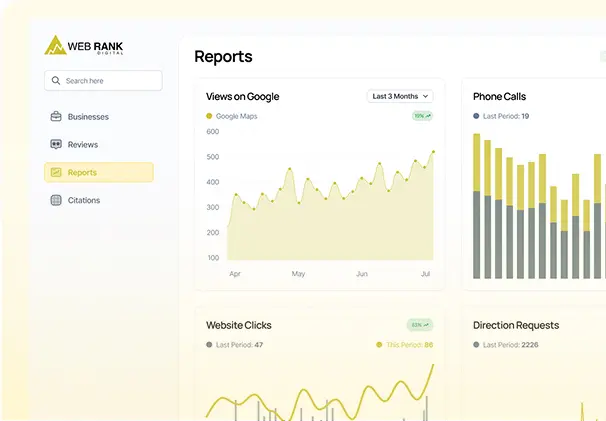
Tools like webrankdigital.com can help you centralize the data from these steps. By combining signals from search, competitor activity, and customer behavior, you get a clearer picture of where the real opportunities lie. The platform is designed to make this kind of analysis repeatable across locations and markets.
Step 5: Test with a Minimal Viable Offer
Before committing fully, test the segment with a small, focused campaign. Create a landing page that speaks directly to that group's pain points. Run a limited ad spend to see if the response matches your estimates. Track not just clicks but also engagement and intent signals such as time on page, form fills, or calls.
This step confirms whether the segment actually behaves as expected. Sometimes the data looks good on paper, but the audience does not respond. Other times you discover a different segment that responds even better than the one you planned for. Stay open to what the test reveals.
What to watch for
Measure conversion rates relative to your main segments. If the new segment converts at a similar or higher rate, you have a viable opportunity. If the volume is lower but the margins are higher, it may still be worth pursuing. Pay attention to feedback from early customers in the segment. They can tell you what matters most and what you are still missing.

Step 6: Build a Repeatable Process
Once you have proven one underserved segment, the method can be applied again. The market shifts constantly. New segments emerge as technology, regulations, and consumer habits change. A process that systematically scans for gaps keeps you ahead of competitors who only react to the market as it was.
Document each step you took and the signals that proved most useful. Share that process across your team so that everyone knows how to spot an underserved group. Over time, this becomes a competitive advantage in itself.
Growth priorities should come from these insights rather than from chasing the same customers as everyone else. The businesses that thrive in crowded markets are often the ones that serve a segment nobody else took seriously. With a market intelligence engine and a disciplined approach, you can find those people and build something that matters to them.
Ends · GROWTHHATCH